Itzal
Last ChristmasItzal is Malphas’s brother, a rescuer in one moment and an armed opponent in another. His significance lies in that sharp reversal: after catching Malphas as he falls from a battle fought high above the land, he later faces him across a battlefield when Malphas turns against the demon forces and demands that Itzal withdraw. Their bond is unmistakable, but it does not spare either brother from the consequences of choosing sides.
Identity and Introduction
Itzal first appears amid the aftermath of an aerial battle in which the combatants have risen so high that the land is no longer visible. Malphas is falling, and the fall itself threatens even an immortal: their bodies can survive much, but the ground below could still kill them. Just as Malphas fears that nothing can save him, Itzal grabs his arm. The rescue establishes their kinship through action before the scene names it in dialogue: Malphas looks up and sees his brother.
The moment is dangerous, but their exchange is familiarly teasing rather than solemn. Itzal grimaces under Malphas’s weight and asks, “Gah! Malphas, how much do you weigh?” Malphas answers that Itzal should be grateful he has stripped off his armor; Itzal counters that he would be more grateful if Malphas dieted. Their banter does not diminish the rescue. As the ground rushes closer, Malphas can see that the fall has slowed, and recognizes that without Itzal’s intervention he would already have been smashed against the landscape.
The Rescue and Its Limits
When they are close to the ground, Itzal lowers Malphas gently onto soft grass. He then tells him, “I’ll return when I can. You’d best hide from the humans.” The instruction makes the rescue temporary rather than a reunion: Itzal leaves, while Malphas must manage his own survival. For Malphas, hiding from humans is another humiliation, but his injuries leave him little choice. He is in too much pain to conceal his demonic form, and his damaged wing prevents him from flying. He could attack the humans, but the possibility of passing out makes that perilous as well.
The scene presents Itzal’s help as concrete and immediate, not as proof that the brothers’ loyalties are settled. He catches Malphas, slows his descent, and places him safely on the grass; then he departs while Malphas remains hurt and vulnerable. The contrast matters later. Itzal has already acted to keep his brother alive, but when they meet again, that personal bond must contend with the military cause Itzal serves.
Reunion and the Demand to Withdraw
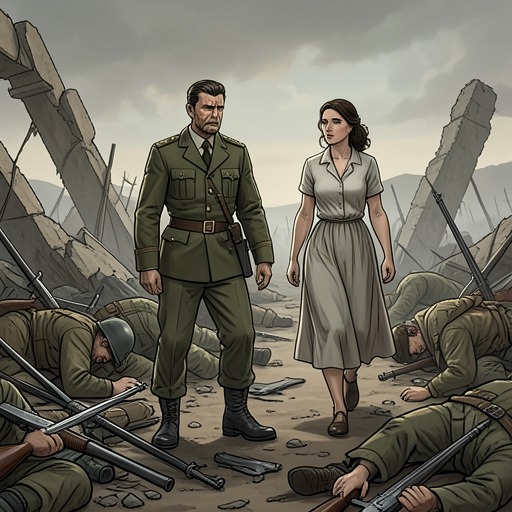
Much later, during an attack on humans, Malphas hears Itzal’s voice and recognizes him. Itzal, in turn, is astonished to find Malphas alive: “It is you! Where have you been? I thought you were dead. We all did.” The exchange reveals the scale of Malphas’s absence. Itzal had believed him dead, as had the others, so his return is not merely an unexpected encounter between brothers; it overturns what Itzal understood about Malphas’s fate.
Malphas immediately puts that reunion to a test. He asks whether Itzal can be talked out of the attack. The humans are ill prepared for the demon horde, and the attack is directed at children. Itzal explains that they are favored by the enemies’ “pets” and that Azura wants them wiped from the planet. Malphas presses him to pull back his forces. When Itzal asks why, Malphas repeats the order and makes the consequence explicit: otherwise, the brothers will be enemies.
Itzal laughs at first, but stops when he understands that Malphas is serious. His question, “You’re on their side?”, names the reversal plainly: the brother he once rescued now stands with the humans Itzal’s forces are attacking. Malphas draws his sword and says he does not want to hurt Itzal, asking him not to make him do something he would rather avoid. Itzal answers with the counter-threat, “Don’t make me kill you, Malphas.” Neither brother can make the other’s position disappear. Their exchange moves from surprise to a demand, then from disbelief to the possibility of fratricidal violence.
Survival and Unresolved Consequences
The humans are eventually safe after the demons are routed, but Itzal survives the battle. Malphas is unsure whether that is a good thing: Itzal will almost certainly be the first to tell Azura about his defection. His survival therefore carries a consequence beyond the battlefield. The brother who once gave Malphas time to escape the humans may now carry news that exposes his choice to the power directing the attack.
Itzal’s arc in these scenes turns on the difference between affection and allegiance. His rescue is intimate and physical: he catches Malphas by the arm, bears his weight, and sets him down gently. Later, the same relationship cannot prevent a confrontation over an attack on children. The brothers remain alive, but the evidence does not show reconciliation or a final settlement between them. Itzal’s likely report to Azura leaves Malphas’s defection newly vulnerable, while Itzal’s survival leaves open the conflict his threat has made explicit.